1
/
of
3
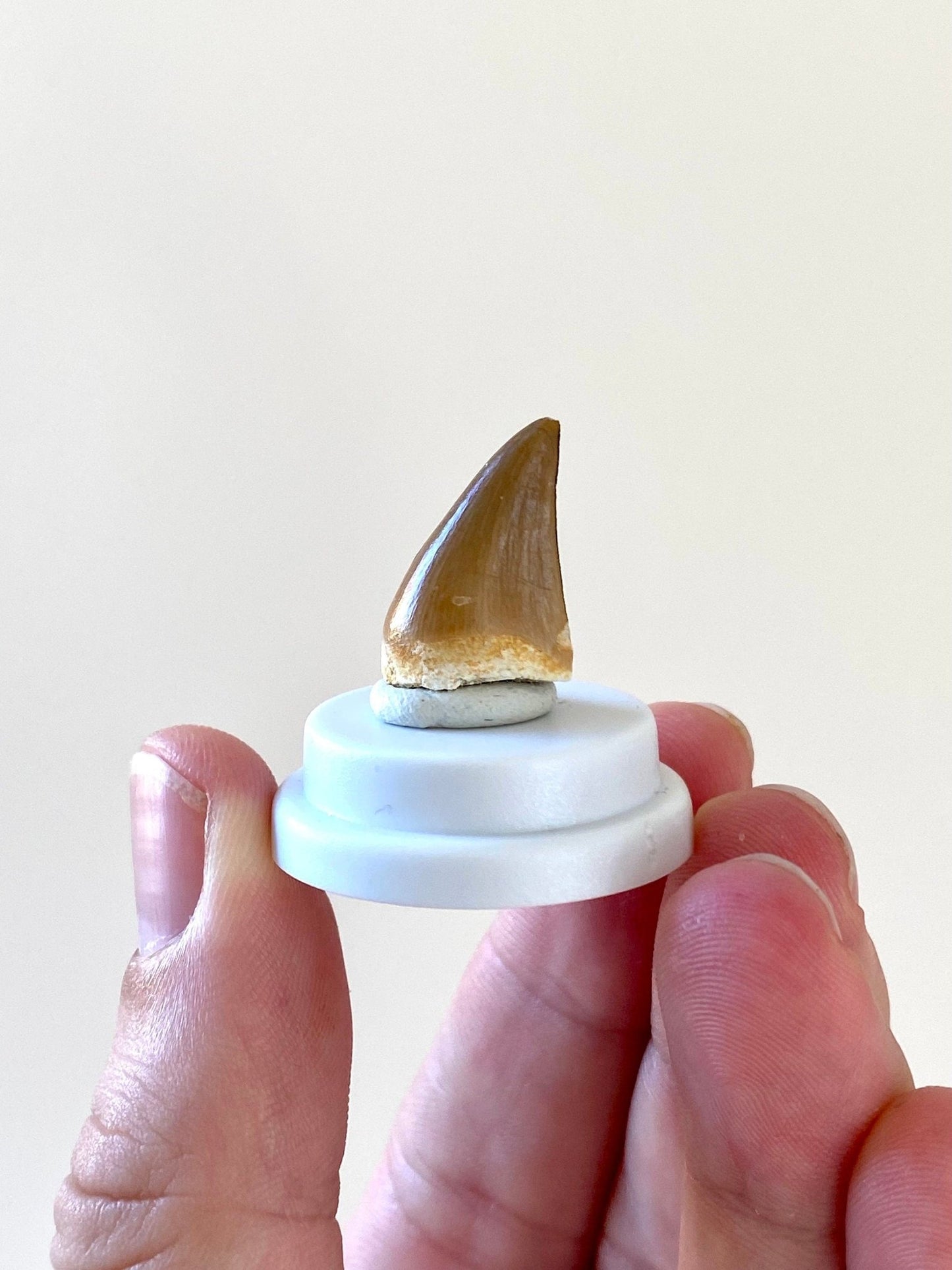
Mosasaur tooth fossil in small acrylic bell jar
Regular price
β¬11,95 EUR
Regular price
Sale price
β¬11,95 EUR
Unit price
/
per
Tax included.
Shipping calculated at checkout.
Couldn't load pickup availability
Shipping rates & times
Β
| Destination | # days** | Starting at |
| Domestic (NL) | 1 - 2Β | β¬6,95 |
| Mainland Europe | +/- 5 | β¬12,95 |
| Non-EU Europe | +/- 7 | β¬14,95 |
| USA | 5 - 7 | $30 |
| Australia | +/- 20 | β¬23,95 |
* Average number of business days in transit
** Other destinations will be calculated automatically during check-out.
*** Shipped with full value insurance
Β
Mosasaurus species tooth.
A-grade enamel on these teeth.
Mosasaurus was one of the biggest predators that lived in the seas during the Cretaceous era.
This particular tooth was found in Khouribga Morocco.
Size: 2.1 cm in length
The Mosasaur is a mesmerizing marine reptile from the age of dinosaurs. ππ
With a serpentine body, powerful flippers, and a set of formidable teeth, these apex predators ruled the oceans during the Late Cretaceous period. π¦π¦΄
Mosasaurs were expert swimmers, using their streamlined forms to hunt a variety of prey, including fish and other marine creatures. Their adaptions for aquatic life, such as flippers instead of legs, made them well-suited to the oceans.
The discovery of these fossils sheds light on the incredible diversity of life that once flourished beneath prehistoric waves. ππ
View full details
A-grade enamel on these teeth.
Mosasaurus was one of the biggest predators that lived in the seas during the Cretaceous era.
This particular tooth was found in Khouribga Morocco.
Size: 2.1 cm in length
The Mosasaur is a mesmerizing marine reptile from the age of dinosaurs. ππ
With a serpentine body, powerful flippers, and a set of formidable teeth, these apex predators ruled the oceans during the Late Cretaceous period. π¦π¦΄
Mosasaurs were expert swimmers, using their streamlined forms to hunt a variety of prey, including fish and other marine creatures. Their adaptions for aquatic life, such as flippers instead of legs, made them well-suited to the oceans.
The discovery of these fossils sheds light on the incredible diversity of life that once flourished beneath prehistoric waves. ππ